Optimal performance is reached within a few days, stabilizing after 10–15 activation cycles.
• darkening happens quickly, while fading back takes longer
About 15 seconds versus approximately 16 minutes.
• activated by ultraviolet light
The more UV exposure, the darker the lenses become. A partially tinted state is a common occurrence.
• indoors, they still retain a nearly imperceptible tint
Around 6%.
• the color differs from static tints
Photochromic lenses are more noticeable from the outside due to their constantly shifting shade.
• they darken only partially inside a car
Car windows block most UV light. However, they will still darken near an apartment window.
• low temperatures enhance darkening, while high temperatures reduce it
At –20°C in clear weather, light transmission can become extremely low. Above +30°C, darkening becomes less effective. The optimal temperature is around 23°C.
• photochromic lenses are sensitive to overheating
It’s best not to leave them on a car dashboard. Proper air circulation is important.
• it’s a technology-driven product
Manufacturers have their own branded solutions: Zeiss — PhotoFusion, Essilor — Transitions. Like smartphones, these lenses also evolve through generations.
• newer generations respond faster
This is usually the key point of competition between manufacturers.
• they are 30–40% more expensive than standard lenses
Photochromic lenses are another feature that works quietly in the background from the wearer’s perspective. When paired with the right frame and tint color, they can give the glasses a great look at every level of darkening.
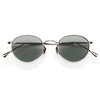
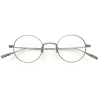
Shown in the photo: Zeiss lenses featuring the latest-generation PhotoFusion X technology. Color: grey.




Personal insights on wearing photochromic lenses
• new photochromic lenses need a break-in period
Optimal performance is reached within a few days, stabilizing after 10–15 activation cycles.
• darkening happens quickly, while fading back takes longer
About 15 seconds versus approximately 16 minutes.
• activated by ultraviolet light
The more UV exposure, the darker the lenses become. A partially tinted state is a common occurrence.
• indoors, they still retain a nearly imperceptible tint
Around 6%.
• the color differs from static tints
Photochromic lenses are more noticeable from the outside due to their constantly shifting shade.
• they darken only partially inside a car
Car windows block most UV light. However, they will still darken near an apartment window.
• low temperatures enhance darkening, while high temperatures reduce it
At –20°C in clear weather, light transmission can become extremely low. Above +30°C, darkening becomes less effective. The optimal temperature is around 23°C.
• photochromic lenses are sensitive to overheating
It’s best not to leave them on a car dashboard. Proper air circulation is important.
• it’s a technology-driven product
Manufacturers have their own branded solutions: Zeiss — PhotoFusion, Essilor — Transitions. Like smartphones, these lenses also evolve through generations.
• newer generations respond faster
This is usually the key point of competition between manufacturers.
• they are 30–40% more expensive than standard lenses
Photochromic lenses are another feature that works quietly in the background from the wearer’s perspective. When paired with the right frame and tint color, they can give the glasses a great look at every level of darkening.
Shown in the photo: Zeiss lenses featuring the latest-generation PhotoFusion X technology. Color: grey.
Retrosuperfuture Number 145 caramella
Optical · Oval · RetrosuperfutureHello GlassesZeiss 1.5 Sph PhotoFusionX grey BlueGuard DuraVisionPlatinum
Lenses · Zeiss $123.00